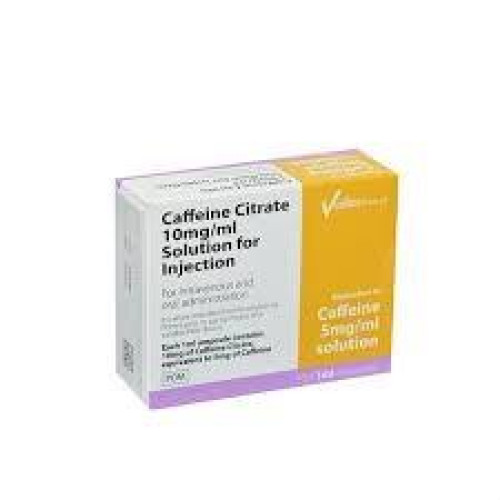
Caffeine Citrate is a high-precision pharmaceutical stimulant specifically formulated for newborn infants. It works through a central respiratory stimulation mechanism: it increases the sensitivity of the brain's respiratory center to carbon dioxide ($CO_2$), stimulates central inspiratory drive, and improves the contractility of the diaphragm. By acting as a competitive antagonist of adenosine receptors, it prevents the inhibitory effects of adenosine on the breathing reflex, effectively treating "Apnea of Prematurity."
In Nigeria, Caffeine Citrate 10mg/mL (available as Peyona or generic brands) is a critical life-saving medication used in Neonatal Intensive Care Units (NICUs). It is available through specialist pediatric hospitals and registered pharmacies like Sanlive Pharmacy, ensuring you receive authentic, sterile-verified ampoules stored in strictly monitored, climate-controlled conditions (below 25°C). This is vital because the citrate salt is chemically stable but must remain sterile; exposure to the Nigerian heat or improper handling can lead to solution degradation or bacterial contamination in a highly vulnerable patient.
Important: This is a high-alert neonatal medication. The "Concentration" Rule: Caffeine Citrate ($20$mg) is equivalent to Caffeine Base ($10$mg); you must verify if the prescription is written for the "Citrate" or the "Base" to avoid a $2x$ dosing error. The "Loading Dose" Rule: Treatment usually begins with a high "loading dose" followed by a lower "maintenance dose" $24$ hours later. The "Monitoring" Warning: Because newborns process caffeine very slowly, they must be continuously monitored for heart rate (tachycardia) and "jitteriness," which are signs of caffeine toxicity.
Caffeine Citrate 10mg/mL Injections are primarily used for:
Treating Apnea of Prematurity: Reducing the frequency and duration of breathing stops in infants born before 35 weeks.
Facilitating Weaning from Ventilators: Helping premature babies breathe on their own after being taken off mechanical ventilation.
Reducing Bronchopulmonary Dysplasia (BPD): Improving long-term lung outcomes in very low-birth-weight infants.
Stimulating the Diaphragm: Increasing the strength of the muscles used for breathing.
Providing Rapid Respiratory Drive: Increasing the metabolic rate and oxygen consumption to support stable breathing.
Offering Predictable Absorption: Ensuring the infant receives the exact dose required in critical care settings.
Supporting Neurological Stability: Providing a mild protective effect on the developing neonatal brain.
This medication is intended for:
Premature infants (born between 28 and 35 weeks) with confirmed apnea.
Newborns in the NICU under the direct supervision of a Neonatologist or Pediatrician.
Not recommended for: Use in older children or adults for general stimulation. It is strictly contraindicated for infants with a known hypersensitivity to caffeine or its components. Use with extreme caution if the infant has a history of Seizures or heart arrhythmias. Consult our pharmacist if the mother was consuming high amounts of caffeine before delivery, as the infant may already have high levels in their blood. Consult your doctor if the infant has Necrotizing Enterocolitis (NEC) or impaired kidney/liver function, as these conditions significantly change how the baby processes the drug.
Administered via Intravenous (IV) infusion or, in some stable cases, via the oral route (using the same solution).
The "Slow Infusion" Tip: For IV use, the loading dose should be administered slowly over 20 to 30 minutes using a precision syringe pump.
The "Dose Tracking" Rule: Maintenance doses are typically given every 24 hours at the same time to maintain steady blood levels.
Consistency is Vital: Treatment is usually continued until the infant has been "apnea-free" for 5 to 7 days.
The "Oral" Note: The injection solution is often given orally to older preemies; it has a bitter taste but is well-absorbed by the gut.
The "Discard" Rule: Caffeine Citrate ampoules do not contain preservatives; any unused portion must be discarded immediately after the dose is drawn to prevent infection.
Caffeine Citrate is life-saving but stimulates many neonatal systems, potentially causing:
Tachycardia: A rapid or irregular heart rate (very common).
Restlessness, "jitteriness," and difficulty sleeping.
Digestive Issues: Increased gastric aspirates, vomiting, or abdominal distension.
Increased urination (diuretic effect).
Hyperglycemia: A temporary rise in blood sugar levels.
Rare but serious: Seizures (usually only with extreme overdose).
Rare: Failure to gain weight if the metabolic rate becomes too high.
Seek medical advice immediately if the infant’s heart rate stays above 180 beats per minute, or if the baby develops persistent vomiting and a "tight" or bloated stomach.
Chiesi (Peyona), Martindale, or reputable international neonatal pharmaceutical firms—ensuring that every 10mg/mL ampoule meets global standards for endotoxin-free sterile manufacturing.
100% authentic medication—guaranteed original stock with verified NAFDAC and pediatric-safety batch tracking.
Guaranteed high-quality storage in climate-controlled, medical-grade facilities to ensure sterile integrity.
Professional counseling from licensed pharmacists on "Neonatal Dosing Calculations" and toxicity signs.
Secure and rapid delivery in specialized packaging to neonatal units across Nigeria.
Is this the same as "Coffee"?
It is the same active chemical, but it is a highly purified, medical-grade version. You should never give a baby coffee or caffeine meant for adults, as the dose cannot be controlled and could be fatal.
How long will the baby be on this "Treatment"?
Most premature babies stay on Caffeine Citrate until they reach a "corrected age" of about 34 to 37 weeks, at which point their brain is mature enough to breathe steadily without help.
Does it affect the "Brain" long-term?
Large clinical trials (like the CAP study) have shown that Caffeine Citrate is safe and may actually improve the neurological development of premature babies by reducing the time they spend without oxygen.
Where can I purchase Caffeine Citrate Injection in Nigeria?
You can fill your neonatal or pediatric specialist prescription for verified Caffeine Citrate at Sanlive Pharmacy & Stores for guaranteed product integrity and life-saving respiratory support.
No reviews yet.
Login to write a review.
Related Products